How to Choose Warehouse Construction Companies in Your Area (2026 Guide)
2026 guide to warehouse construction companies in your area: national costs per sq ft, how to vet commercial warehouse builders, red flags, and current pay & benefits for construction jobs.
Building a warehouse in 2026 is a major investment — with national costs ranging from $85 to $200 per square foot, choosing the right warehouse construction company can save you hundreds of thousands of dollars. This guide shows you exactly how to vet commercial warehouse builders, what red flags to avoid, and what pay and benefits top warehouse construction companies are offering skilled workers this year. Whether you’re an owner planning a distribution center or a professional looking for warehouse construction jobs, you’ll find the 2026 data you need right here.
The U.S. warehouse construction market in 2026 is defined by record demand, rising material costs, and a severe shortage of skilled labor. Whether you are planning a 40,000-square-foot distribution center or researching warehouse construction companies in your area, the decisions you make today will affect your budget for decades. This guide breaks down 2026 construction costs, shows you how to judge the quality of a warehouse builder, and reveals what top firms now pay and offer to attract workers.
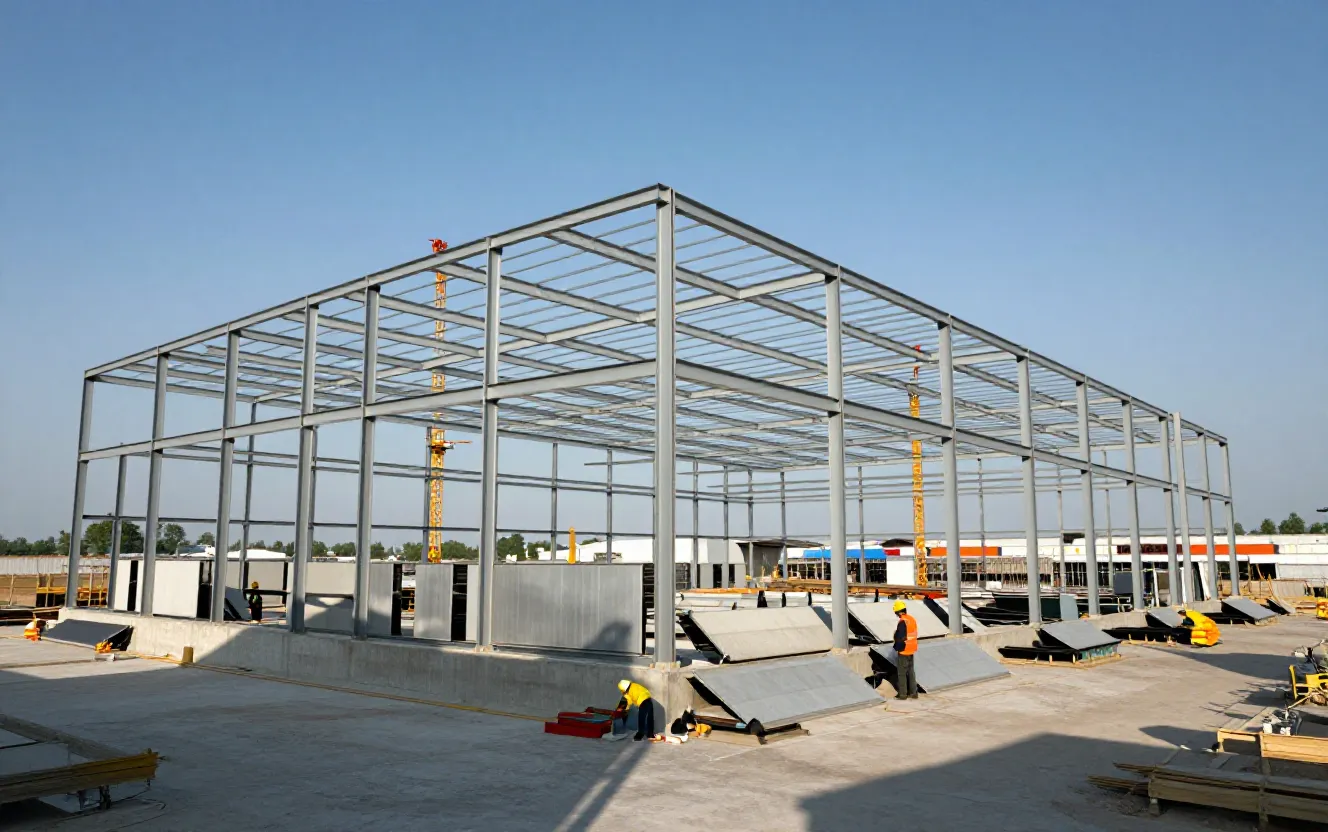
2026 Warehouse Construction Costs: What the Market Really Looks Like
According to 2026 industry data, the national average cost to build a standard warehouse ranges from $85 to $200 per square foot for a turnkey commercial facility. But the number varies widely based on size, finish, and complexity. Smaller projects cost more per square foot because mobilization, permitting, and design expenses are spread over less space.
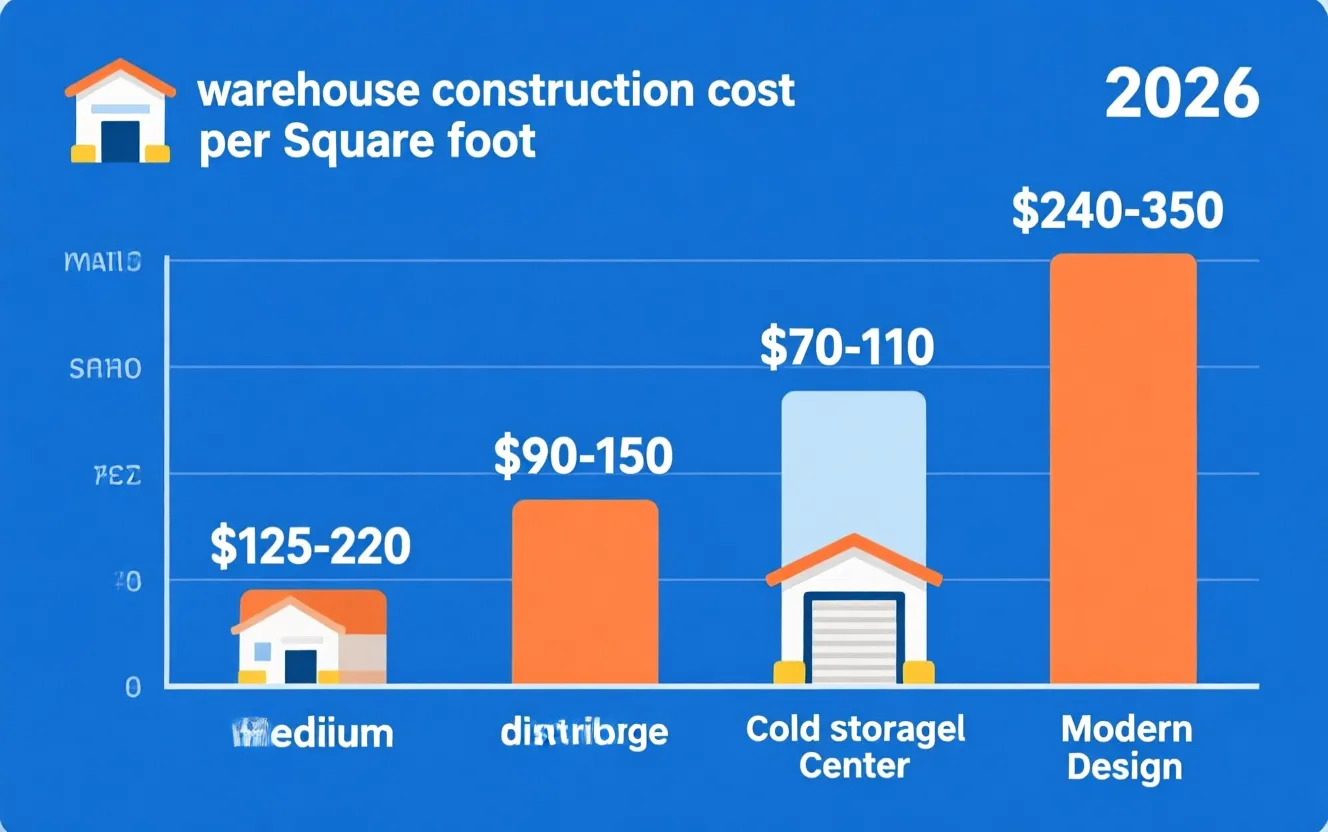
Facility Type2026 Cost Per Sq FtTypical SizeSmall warehouse$125 – $2205,000 – 25,000 sq ftMedium warehouse$90 – $15025,000 – 100,000 sq ftLarge distribution center$70 – $110100,000+ sq ftPre-engineered metal building (PEMB) shell$14 – $45Any scaleTilt-up concrete structure$25 – $40100,000+ sq ftCold storage / refrigerated$240 – $350+Any scaleAutomated / smart warehouse$150 – $250Any scale
For example, a 100,000-square-foot warehouse typically costs $2 million with a basic pre-engineered metal building, up to $6 million with tilt-up construction and enhanced material handling systems. Key cost drivers in 2026 include clear height (each additional 4 feet adds roughly $2–$4 per square foot), dock door counts, ESFR sprinkler systems, and material price volatility tied to tariffs.
How to Judge a Warehouse Construction Company: The 2026 Checklist
Not all warehouse builders deliver the same quality. A bid dramatically lower than every other estimate is usually a sign of missed scope — or a coming change-order strategy. Use this checklist to evaluate any commercial warehouse builder before you sign.
Green Flags: What a Reliable Warehouse Builder Shows You
- License, bonding, and insurance certificates— a current surety bond letter proving single-project and aggregate capacity. If your project is $8M and the firm’s single-project limit is $5M, that is a red flag.
- An EMR (Experience Modification Rate) at or below 1.0— this signals a strong safety record, which matters for both timelines and worker protection.
- References from comparable projects— call them and ask: Did the project come in on budget? On time? Would you hire them again?
- A clear answer on who runs the project— the actual superintendent and project manager, not a salesperson.
- A willingness to do preconstruction work— real firms welcome estimating and value-engineering before breaking ground.
Red Flags: Walk Away From These
Red FlagWhy It MattersBid dramatically lower than all othersMissed scope or planned change-order strategyRefuses to share license, bond, or insuranceLikely unlicensed or underinsuredNo clear answer on who runs the projectYou may get an inexperienced crewVague or hesitant referencesTrack record cannot be verifiedEMR above 1.0 with no explanationHigher injury risk and insurance costsPressure to skip preconstruction and “just start”Cost overruns and disputes almost guaranteed
Warehouse Construction Jobs in 2026: Pay, Benefits, and What Top Companies Offer
The construction industry needs an estimated 499,000 new workers by 2026, and skilled labor remains the sector’s most persistent constraint — more limiting than demand itself. That labor shortage has pushed wages and benefits sharply upward at leading warehouse construction companies. The U.S. warehousing and storage industry alone employed about 1.85 million people in June 2026 (Bureau of Labor Statistics), and competition for experienced craft professionals is intense.
2026 Pay Ranges for Construction Professionals
PositionBase SalaryTotal CompensationConstruction Manager$85,000 – $115,000$95,000 – $135,000Project Manager$85,000 – $120,000$95,000 – $145,000Superintendent$80,000 – $115,000$90,000 – $135,000Safety Director$80,000 – $115,000$90,000 – $135,000Estimator / Preconstruction Manager$70,000 – $100,000$80,000 – $120,000Skilled craft workers (hourly)$22 – $40 per hourOvertime + per diem
Benefits Skilled Workers Should Demand in 2026
- 401(k) with company matching— now standard at reputable warehouse builders
- Health, dental, and vision insurance— with paid disability coverage
- Paid training and certifications— OSHA, rigging, welding, and forklift credentials
- Daily or weekly pay options— increasingly common for field positions
- Per diem and travel allowancesfor projects outside your home market
- Clear career progression— laborer to foreman to superintendent paths
Because skilled craft professionals now have more choices and higher expectations, the best warehouse construction companies in 2026 differentiate themselves with safety culture, steady project pipelines, and real advancement paths — not just hourly rates.
How to Find Warehouse Construction Companies in Your Area
Start with location-specific searches such as “warehouse construction companies in my area”, “warehouse contractors near me”, and “warehouse builders near me” to build a shortlist of commercial warehouse builders. Then verify each firm against the checklist above: check their license status with your state contractor board, review their OSHA 300 logs and EMR, and request at least three references from projects comparable in size and type to yours.
For job seekers, search “warehouse construction jobs” plus your city name, and filter for employers that publish their benefits packages and safety records upfront — transparency is the strongest indicator of a quality employer.
Conclusion: Your Next Step
The warehouse construction market in 2026 rewards careful research. Owners who vet contractors on bonding, EMR, and references avoid costly change orders; workers who compare benefits and safety culture land better-paying, longer-term roles. Whether you are hiring a warehouse construction company or joining one, use the 2026 data in this guide as your benchmark.
Ready to move forward? Search for warehouse construction companies in your area today, shortlist three commercial warehouse builders, and run every candidate through the checklist above before you sign.