America’s livestock industry is facing a severe labor shortage — over 2.4 million agricultural positions went unfilled in 2024 and 56% of farmers report difficulty finding workers. This guide covers everything you need to know about livestock factory jobs in the United States for 2026: salary expectations ($14–$25/hour), the H-2A visa pathway, top hiring states, job requirements, and how to apply. Whether you’re looking for meat processing plant work, dairy farm positions, or cattle ranch jobs, this is your complete starting point.
Why Livestock Factory Jobs Are Booming in 2026
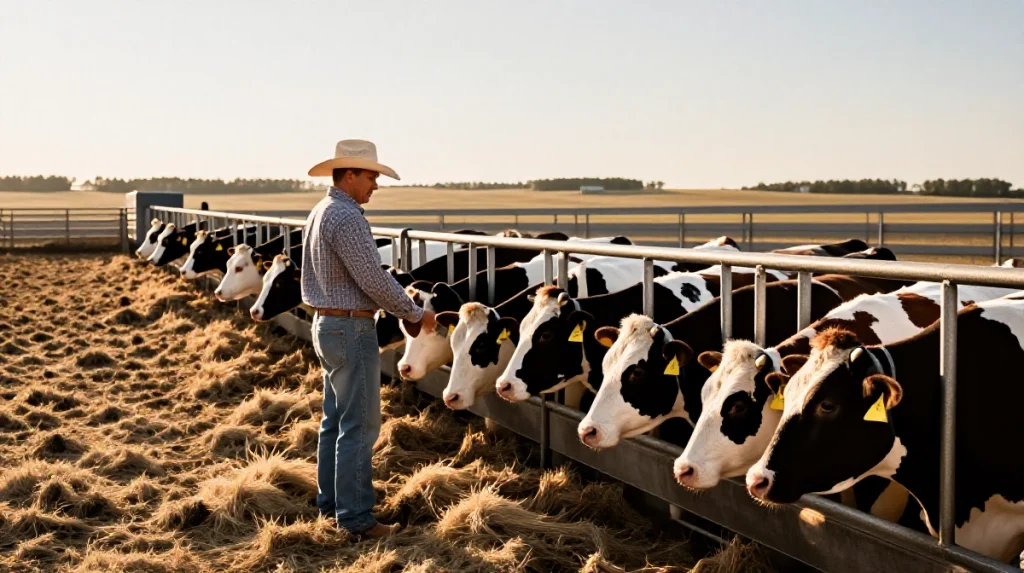
The U.S. livestock industry is in the middle of a workforce crisis. According to USDA data, 2.4 million agricultural job openings went unfilled in 2024, and 56% of farm operators report significant labor shortages. The livestock sector specifically added 42,000 new jobs from 2010 to 2024 — a 19% increase — yet employers still can’t find enough workers.
What does this mean for job seekers? Rising wages, more openings, and better benefits. Hired farm labor wages have grown 17% faster than the national private-sector average over the past decade. In 2026, the trend continues. Livestock and meat processing employers are competing harder than ever to attract and retain workers.
Types of Livestock Factory Jobs Available
Livestock factory work isn’t one job — it’s a whole industry with many roles. Here are the main categories you’ll find in 2026:
Farm and Ranch Hands
These workers handle the daily care of animals — feeding, cleaning barns and pens, monitoring animal health, assisting with births, and maintaining fences and facilities. Cattle, hog, and poultry operations all need reliable hands. Pay typically ranges from $14 to $20 per hour depending on experience.
Meat Processing Plant Workers
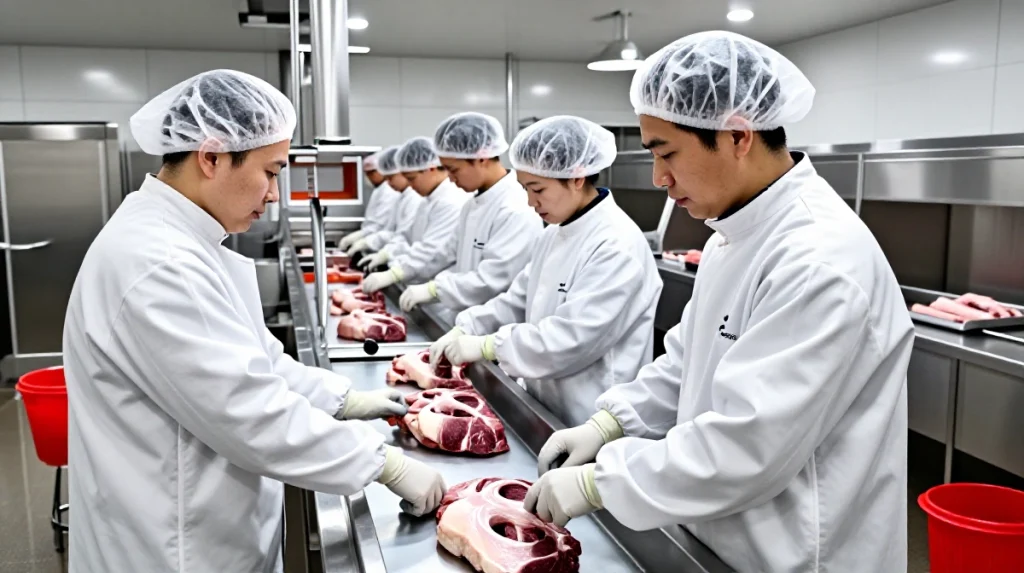
Processing plants turn live animals into meat products. Roles include slaughtering, cutting, deboning, trimming, packaging, and quality inspection. The meat and poultry processing industry supports 584,000 direct jobs across the U.S. and contributes $57.3 billion to the economy. As of June 2026, the national average pay is $18.24 per hour ($37,947 per year), with experienced workers earning up to $39 per hour at some plants.
Dairy Farm Workers
Dairy operations need milkers, herd managers, feeders, and equipment operators. With robotic milking systems becoming more common, basic tech skills are increasingly valuable. Average salary is around $37,795 per year, plus benefits worth an additional $6,756 on average — including housing allowances, paid vacation, and health insurance.
Equipment Operators and Maintenance
Modern livestock operations rely on tractors, feed mixers, conveyor systems, refrigeration units, and automated feeding equipment. Mechanics and equipment operators are in high demand, with many beef plant roles paying $78,000 to $134,000 annually for skilled technicians.
Supervisory and Management Roles
Larger operations need herd managers, shift supervisors, QA inspectors, and farm managers. These roles typically require experience and offer salaries from $45,000 to well over $80,000 depending on the operation’s size and location.
Salary Breakdown by Role and Region
Wages vary significantly by job type, experience level, and location. Here’s a clear picture of what you can expect in 2026:
Job Type Entry-Level Experienced Top Earners Livestock Farm Hand $14–$16/hr $17–$20/hr $22–$25/hr Meat Processing Worker $15–$18/hr $18–$23/hr $30–$39/hr Dairy Farm Worker $15–$17/hr $17–$21/hr $24–$28/hr Equipment Technician $18–$22/hr $25–$35/hr $40–$65/hr Herd/Farm Manager $40k–$50k/yr $55k–$75k/yr $80k–$100k+/yr
Keep in mind that H-2A workers are guaranteed the Adverse Effect Wage Rate (AEWR), which varies by state. In 2026, the AEWR ranges from around $14.83 in parts of the South to $19.97 in California. Employers must also provide free housing and transportation — a significant benefit that adds thousands of dollars to your total compensation.
H-2A Visa: The Best Legal Pathway for Foreign Workers
The H-2A temporary agricultural visa program is the primary legal route for foreign workers seeking livestock jobs in the U.S. Unlike the H-2B visa, the H-2A program has no annual cap and no lottery — if you qualify, you can get in.
Key Benefits of the H-2A Program
Employers who hire through H-2A must provide:
– Free housing that meets federal and state safety standards
– Free daily transportation between housing and the worksite
– Reimbursement for travel costs from your home country to the U.S.
– Payment at or above the AEWR (state-specific minimum)
– A guaranteed minimum of three-quarters of the promised work hours
Step-by-Step Application Process
Here’s how the H-2A process works, from start to finish:
Step 1 — Job Order (60+ days before start date): The employer submits a job order to the State Workforce Agency, which begins recruiting U.S. workers first.
Step 2 — DOL Application (45+ days before start): The employer files Form ETA-9142A with the Department of Labor’s Office of Foreign Labor Certification through the FLAG system.
Step 3 — U.S. Worker Recruitment: The employer must actively recruit American workers for 14–21 days. If no qualified U.S. workers apply, the position becomes available for H-2A hiring.
Step 4 — Labor Certification: The DOL issues a temporary labor certification if all requirements are met.
Step 5 — USCIS Petition: The employer files Form I-129 with U.S. Citizenship and Immigration Services on your behalf.
Step 6 — Visa Application and Interview: You apply for the H-2A visa at a U.S. embassy or consulate, attend an interview, and complete biometric screening.
Important: Year-Round vs. Seasonal Work
The H-2A program is designed for temporary or seasonal work (up to 10 months). Most livestock operations that need year-round workers — like dairy farms, hog confinement operations, and poultry facilities — currently cannot use the H-2A program for those year-round roles. An exception exists for range livestock operations (sheep and goats), which can use H-2A for 24/7 on-call herding. The proposed Farm Workforce Modernization Act of 2025 aims to expand year-round H-2A access for the dairy and livestock sector — progress to watch in 2026.
Top States Hiring Livestock Workers in 2026
Where you work matters — both for wages and quality of life. Here are the top states for livestock factory jobs in 2026:
State Key Livestock Sector Typical Wage Range 2026 AEWR Texas Cattle, beef processing $14–$22/hr $16.45 (entry-level) Iowa Pork, beef, processing $15–$24/hr $15.50–$17.00 Nebraska Beef cattle, feedlots $15–$25/hr $15.00–$16.50 California Dairy, poultry $16–$28/hr $19.97 Wisconsin Dairy farming $15–$22/hr $15.50–$17.00 North Carolina Pork, poultry $14–$20/hr $14.83–$16.00 Kansas Beef processing $15–$26/hr $15.00–$16.50
States in the Midwest and South tend to have lower wages but also lower living costs. California offers higher wages — particularly for dairy workers — but housing and everyday expenses are much higher. Factor in cost of living when deciding where to apply.
What You Need to Qualify for Livestock Factory Jobs
Physical Requirements
Livestock factory work is physically demanding. Most roles require:
– Ability to stand for 8–10 hour shifts
– Lifting 50 to 100 pounds regularly
– Working in varying temperatures (hot barns, cold processing rooms)
– Comfort handling live animals or raw meat
– Good hand-eye coordination for cutting and processing tasks
Safety and Certification
The Occupational Safety and Health Administration (OSHA) sets strict standards for meat and livestock facilities. Workers must follow protocols for:
– Personal protective equipment (PPE): cut-resistant gloves, steel-toe boots, hearing protection
– Machine safety: lockout/tagout procedures, conveyor safety
– Chemical safety: ammonia refrigeration, sanitizers like peracetic acid
– Slip, trip, and fall prevention on wet floors
– Ergonomic practices to reduce repetitive strain injuries
For processing plant roles, HACCP (Hazard Analysis and Critical Control Points) certification is often required or preferred. Training programs like the Oklahoma State University Meat Mastery Program and online Food Safety & Meat Processing 101 courses can help you get certified.
Language and Education
Many livestock factories and processing plants employ workers with limited English, especially through the H-2A program. Basic English helps but isn’t always required for entry-level roles. On-the-job training is standard. For supervisory and technical roles, higher English proficiency and relevant experience are expected.
Where to Find Livestock Factory Jobs
Ready to apply? Here are the best places to look in 2026:
Job Boards: ZipRecruiter lists over 1,000 livestock farming positions and hundreds of meat processing plant jobs. Indeed, FarmandRanchJobs.com, AgHires, and FarmJobSearch.com are also go-to platforms.
Company Websites: Major meat processors like Tyson Foods, Cargill, JBS USA, and Wayne Farms post openings directly. Dairy cooperatives like Dairy Farmers of America also list opportunities.
USDA Resources: The USDA’s farmers.gov portal provides guidance on the H-2A process and links to approved employer listings. The ERS Farm Labor page offers wage data to help you compare offers.
Recruitment Agencies: Staffing firms like Surge Staffing and farm labor contractors frequently hire for livestock positions across multiple states.
Final Thoughts
The U.S. livestock industry needs workers — and it’s willing to pay for them. With wages rising faster than most other sectors, a clear visa pathway through the H-2A program, and thousands of positions available across the country, 2026 is an excellent time to pursue livestock factory work in America.
Start by identifying the type of work that fits your skills, research wages in your target state, and connect with employers who participate in the H-2A program if you’re applying from abroad. The work is demanding, but the opportunities are real. The livestock industry is the backbone of American agriculture — and it’s hiring.