Warehouses are becoming an increasingly important part of modern retail, manufacturing, e-commerce, and logistics. 📦 From receiving products to preparing customer orders, warehouse work includes many different roles and responsibilities. Understanding how these jobs work can provide a useful look at employment and future career paths within the warehouse industry.
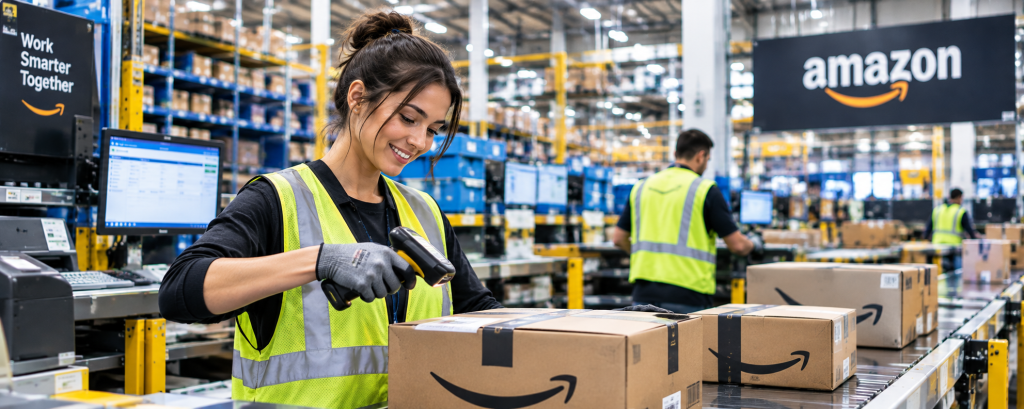
Understanding Warehouse Work and Modern Warehouse Jobs
Modern warehouses are much more than buildings used to store products. They are active logistics centers where goods are received, organized, picked, packed, checked, and prepared for distribution. Because of these different processes, warehouse jobs can cover a broad range of responsibilities and work environments.
Common warehouse roles may include warehouse associates, order pickers, packers, package handlers, inventory assistants, receiving workers, shipping workers, forklift operators, and quality control staff. Some positions focus primarily on moving or preparing goods, while others involve inventory records, order accuracy, equipment operation, or coordination between different areas of a warehouse.
Entry-level warehouse work may involve tasks such as sorting packages, scanning items, organizing shelves, preparing orders, checking labels, loading or unloading goods, and maintaining organized work areas. The exact responsibilities depend on the type of facility. An e-commerce fulfillment center, for example, may operate differently from a manufacturing warehouse or regional distribution center.
For people exploring warehouse employment, this variety means there are different ways to enter the industry and develop experience. Reliability, attention to detail, teamwork, organization, and the ability to follow workplace procedures are commonly useful skills across many warehouse environments.
Warehouse Employment and Different Career Paths
Warehouse employment includes more than a single type of job. A large facility may rely on workers across receiving, storage, inventory, picking, packing, shipping, equipment operation, quality control, administration, and logistics coordination. This creates different career paths depending on a worker’s experience, skills, training, and interests.
Someone entering warehouse work might begin with general responsibilities such as order picking, packing, sorting, or material handling. With additional workplace experience, some workers may move toward inventory control, equipment operation, team coordination, quality control, shipping and receiving, or warehouse administration.
Technology is also creating another category of warehouse careers. Warehouse Management Systems (WMS), barcode scanners, RFID technology, automated storage systems, robotics, and inventory software are increasingly connected with everyday warehouse operations. As a result, some warehouse positions combine traditional operational knowledge with basic digital or technical skills.
Career development varies considerably between employers and locations, so progression should not be considered automatic. However, understanding multiple warehouse processes can broaden the types of roles a worker may be able to explore. Experience in inventory, logistics systems, safety procedures, equipment, and workflow coordination may also be relevant to opportunities elsewhere in the supply-chain industry.
How Technology Is Changing Warehouse Jobs
Technology is reshaping the way warehouses operate. Barcode systems and digital inventory tools have already changed how products are tracked, while automated conveyors, robotic systems, smart sensors, and artificial intelligence are becoming more visible in modern logistics facilities.
Automation does not necessarily mean that every warehouse task becomes fully automated. Instead, the nature of some jobs may change. Repetitive product movement or sorting can increasingly be supported by machines, while workers may spend more time monitoring systems, handling exceptions, checking accuracy, coordinating workflows, maintaining equipment, or completing tasks that require human judgment and flexibility.
This development may also change which skills are useful in warehouse employment. Alongside traditional abilities such as organization, teamwork, safe material handling, and attention to detail, familiarity with scanners, inventory software, automated equipment, and digital warehouse systems may become increasingly relevant.
For workers considering the longer-term warehouse industry, learning how technology interacts with physical warehouse operations can be useful. The warehouse of the future is likely to involve people and automated systems working together rather than relying entirely on one or the other.
The Future of Warehouse Work and Logistics Careers
The future of warehousing is closely connected with changes in e-commerce, retail distribution, manufacturing, supply chains, and customer expectations. Businesses continue to look for ways to move products accurately and efficiently, which keeps warehouses at the center of many distribution networks.
Future warehouses may become more automated, connected, and data-driven. Smart inventory systems can help monitor products, automated equipment can support repetitive processes, and data analysis can help facilities plan inventory and workflow more effectively. Sustainability may also influence warehouse design through energy-efficient buildings, improved packaging practices, waste reduction, and changes in transportation and distribution.
These developments could gradually change warehouse employment. Traditional roles such as warehouse associates, pickers, packers, shipping workers, and equipment operators may continue to exist while working alongside newer positions involving automation, warehouse systems, inventory technology, maintenance, and data-supported logistics.
For people researching warehouse jobs, it can therefore be helpful to look beyond individual vacancies and understand the broader industry. Warehouse work can provide exposure to inventory management, order fulfillment, distribution, logistics technology, and supply-chain operations—areas that may remain important as modern commerce continues to evolve.
Building Skills for a Changing Warehouse Industry
Warehouse careers can involve both practical and technical development. Basic workplace skills such as communication, organization, accuracy, teamwork, and awareness of safety procedures remain important across many roles. Depending on the position, workers may also develop experience with inventory systems, scanners, material-handling equipment, shipping procedures, or warehouse software.
As warehouse technology develops, learning new systems may become increasingly useful. Workers who understand both physical warehouse processes and the digital tools used to manage them may be able to explore a wider range of responsibilities over time.
Warehousing remains an important link between products, businesses, and customers. While equipment and technology will continue to change how warehouses operate, people remain involved in receiving, organizing, monitoring, maintaining, coordinating, and moving goods throughout the supply chain. Understanding these changes can help provide a clearer picture of what warehouse employment and warehouse careers may look like in the years ahead.